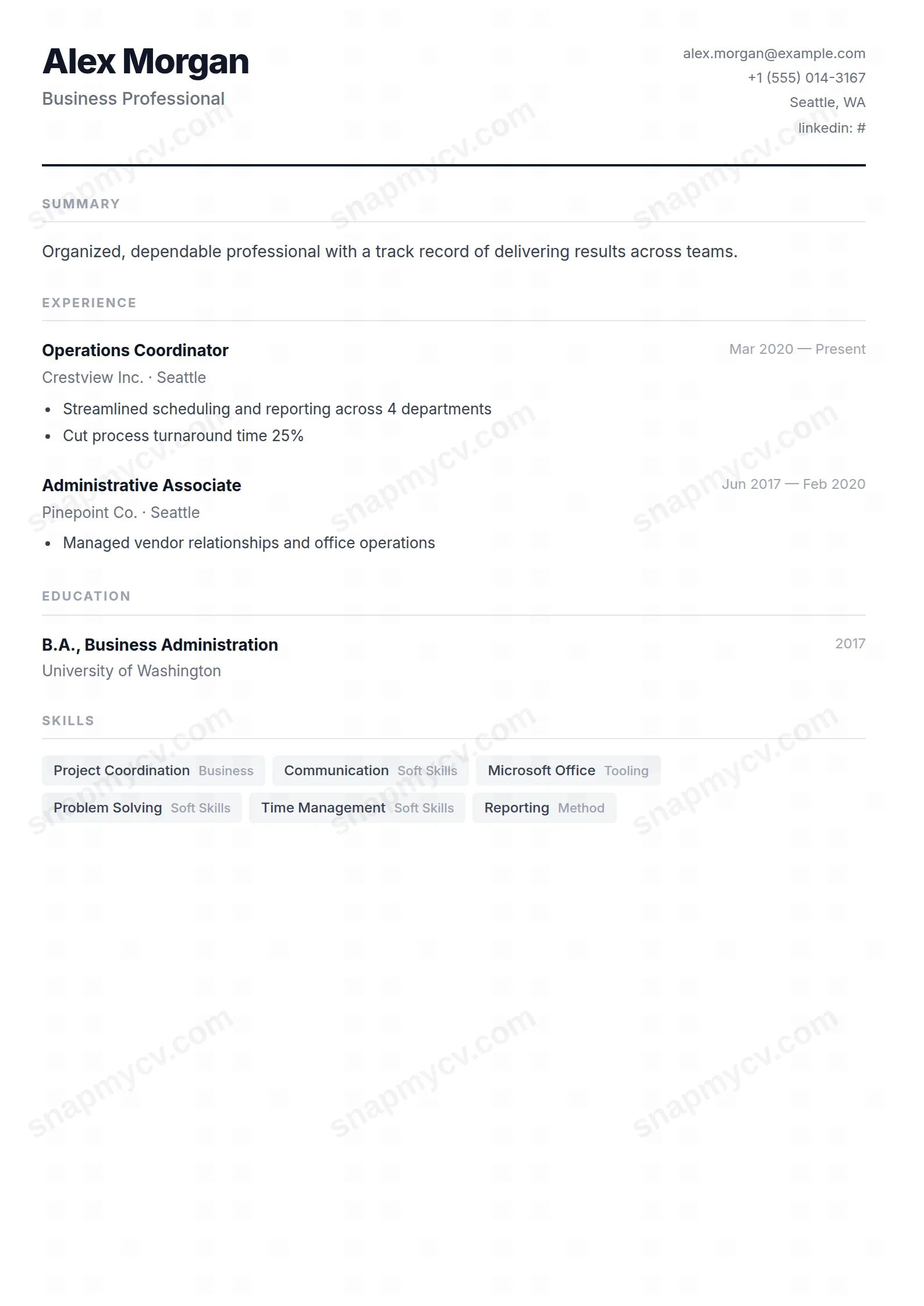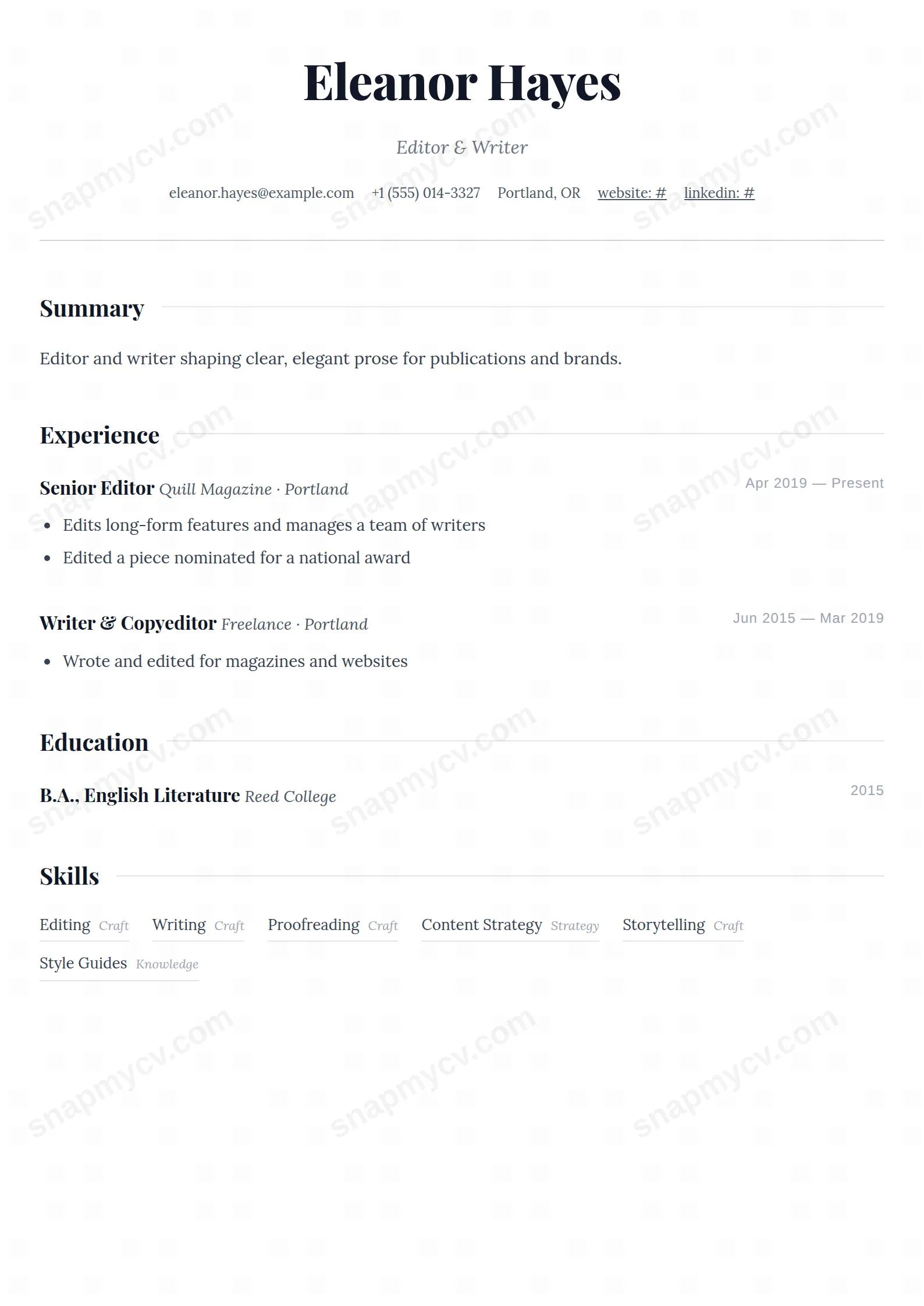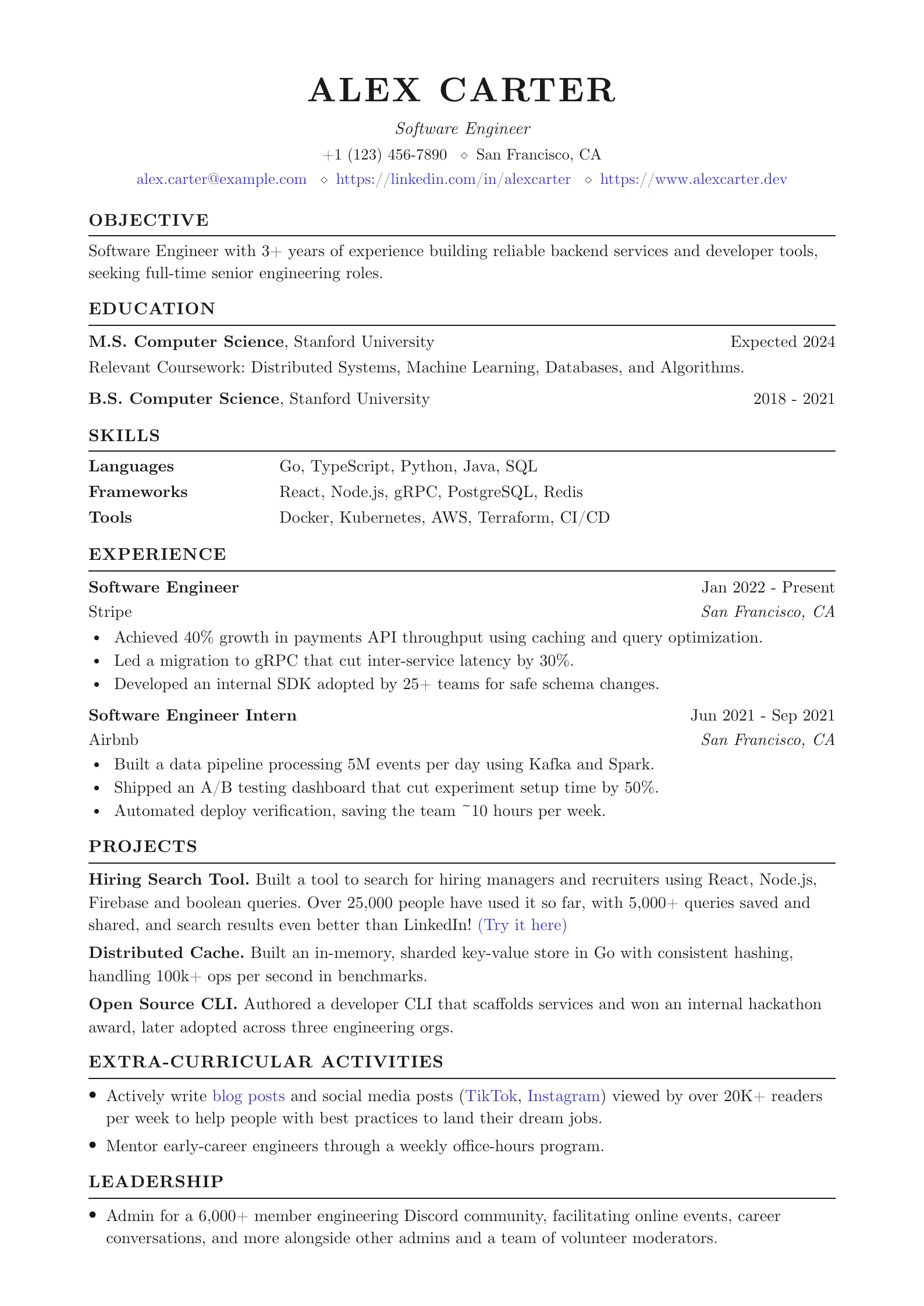
Molecular hexagon accents with mint and slate for pharmacists and researchers.
Create a free account to customize and publish this design.
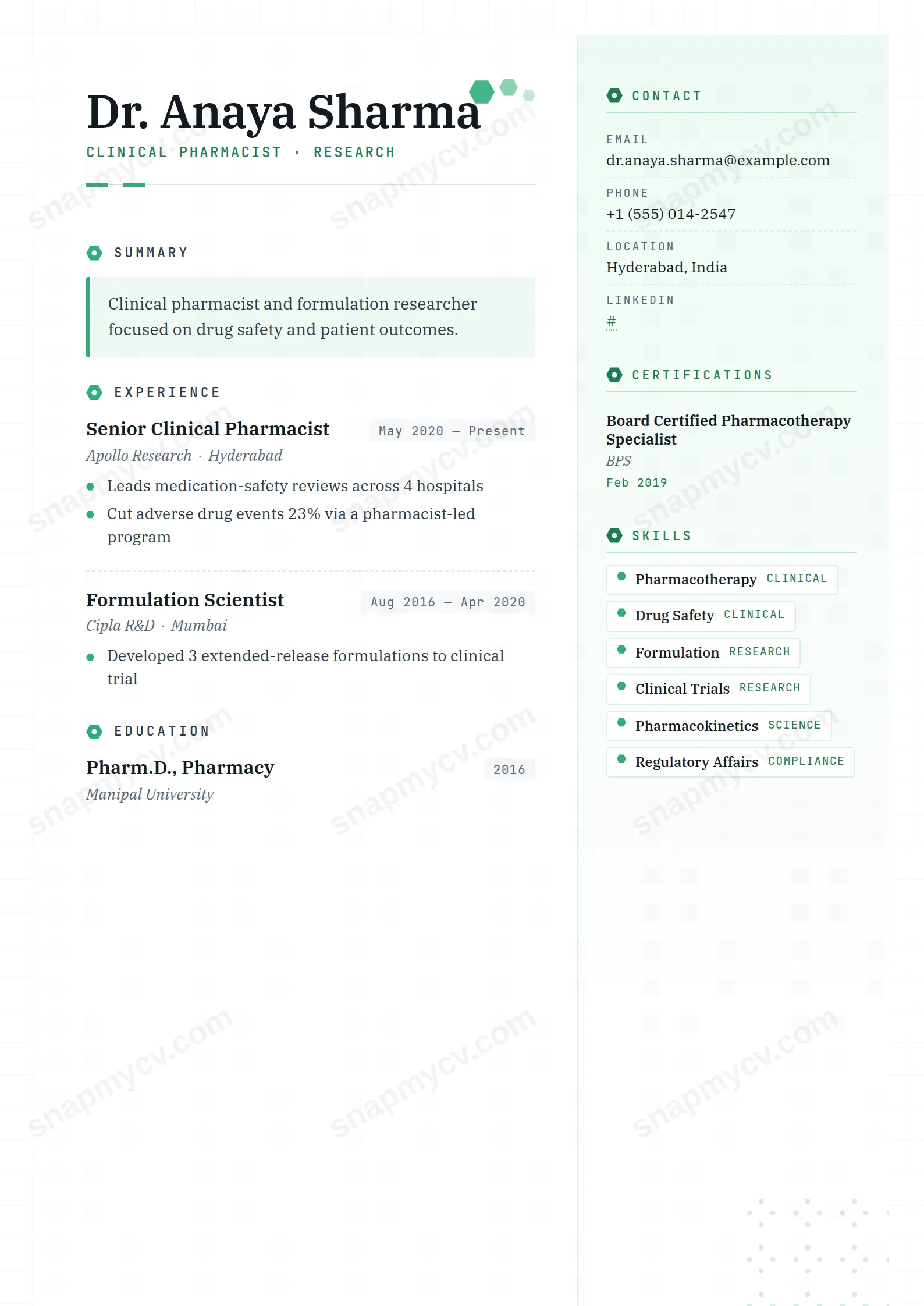
Molecular hexagon accents in mint and slate give lab careers a precise, modern frame. Methods, instruments, and GxP experience are structured for fast technical screening.
Best for: pharmacists, lab scientists, and research technicians. Free to fill in, restyle, download as a PDF, or publish at your own SnapMyCV link.
Applicant tracking systems: Light styling. Mostly parseable but uses sidebars, columns or visual elements that may confuse stricter ATS.A template's styling never changes the advice that matters most — lead with achievements, quantify your impact, and tailor the content to each role.
New to writing a CV? Read our step-by-step CV guide and ATS tips, then come back and make this design your own.
Every choice here points back to the lab bench. The page rests on a faint science-paper grid wash, and each section title is tagged with a hexagon molecule marker in mint green (#2fae7a, deepening to #1f7a55), so the document scans like a structural diagram rather than a form. That mint is used with restraint, appearing only in the markers, the summary callout and the soft #effaf4 sidebar, which keeps the near-black slate (#131a21) name and body text firmly in charge. The header closes on a short dashed mint segment styled as a molecular bond rule, a small joke that signals the whole design is fluent in the field.
The typography does the real work of establishing authority. Your name is set large in IBM Plex Serif, a face with the crispness of a well-set paper title, while micro-labels, dates and the headline run in uppercase JetBrains Mono with wide tracking, echoing how reagent labels and figure captions are printed. The 268px right sidebar, finished with a faint hexagon lattice in the corner, holds compact bordered cards, and the main column reserves a dedicated publications block rendered as a numbered, citation-style list with bracketed [1] references. That hierarchy tells a reader instantly that this is someone who documents, cites and validates for a living.
Pharma Lab is genuinely built for people whose work is regulated and evidence-driven: pharmaceutical and analytical chemists, formulation and QA/QC scientists, clinical research associates, regulatory affairs specialists, and biotech R&D staff. The first-class, citation-style publications block is the tell, so the template earns its keep when you have papers, posters or patents to number. Lab technicians and recent graduates can still use it well by leaning on certifications, methods and instruments instead.
Be honest about where it works against you. If you are pivoting out of science into an unrelated field, the molecule markers and mono captions read as costume rather than credential, and a plainer template will serve you better. The same is true if your history is long and prose-heavy, because the serif body and two-column grid reward tight, edited writing, not walls of text.
Feed the layout the way it wants to be read. The mint-tinted summary callout at the top of the main column should carry three or four lines of precise, outcome-led prose that names your specialism, key methods and the standards you work to (GMP, GLP, HPLC, ICH). Keep experience bullets trimmed to a single quantified result each, because the IBM Plex Serif body exposes padding, and let the mono date chips stay factual. Route every technical competency into the sidebar skills cards grouped by category, and reserve the bracketed [1] publications list for genuine citations rather than talks or internal reports.
The common mistake is overloading the narrow 268px sidebar until certifications, languages and hobbies stack into cramped, wrapping cards. Prune it to the essentials and push detail into the main column. If you have no publications, hide that block entirely so experience and certifications lead, and the two-column balance holds instead of leaving an awkward gap where the numbered list would sit.
A hiring scientist or lab manager will recognise the bracketed [1] citation style instantly and treat it as a credibility signal, scanning it the way they scan a paper's reference list. A generalist recruiter may skim past it, which is fine, because your summary callout and experience still lead the main column. Only fill it with real papers, posters or patents, since a thin or padded list is more conspicuous in this format than in a plain one.
Mostly, yes. The near-black slate (#131a21) name and body text carry all the essential information, so nothing critical depends on colour. In greyscale the mint hexagon markers and #effaf4 sidebar drop to light grey tones, which flattens the science-lab character but keeps the section structure and sidebar cards clearly delineated, so a printed or photocopied copy still reads cleanly.