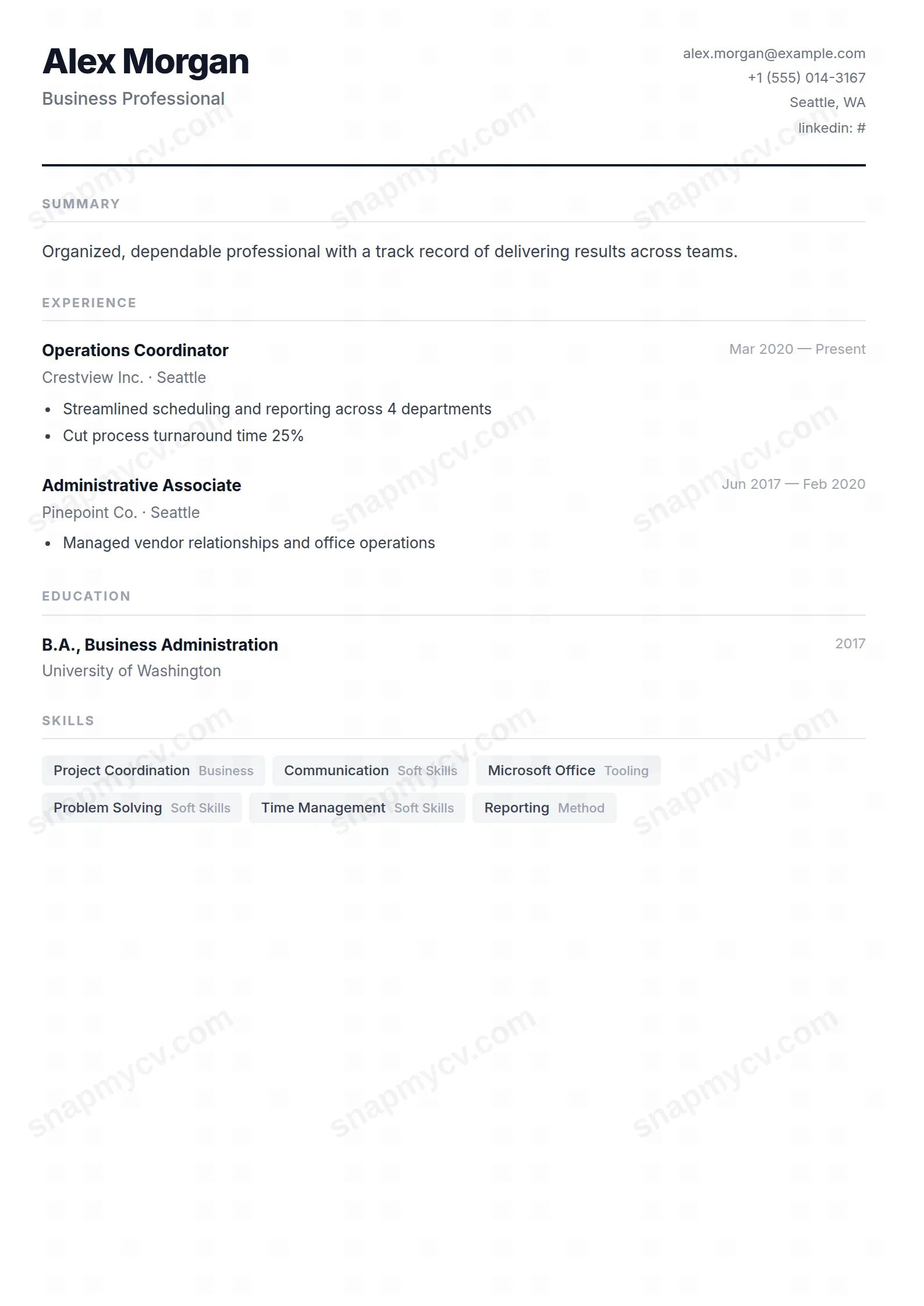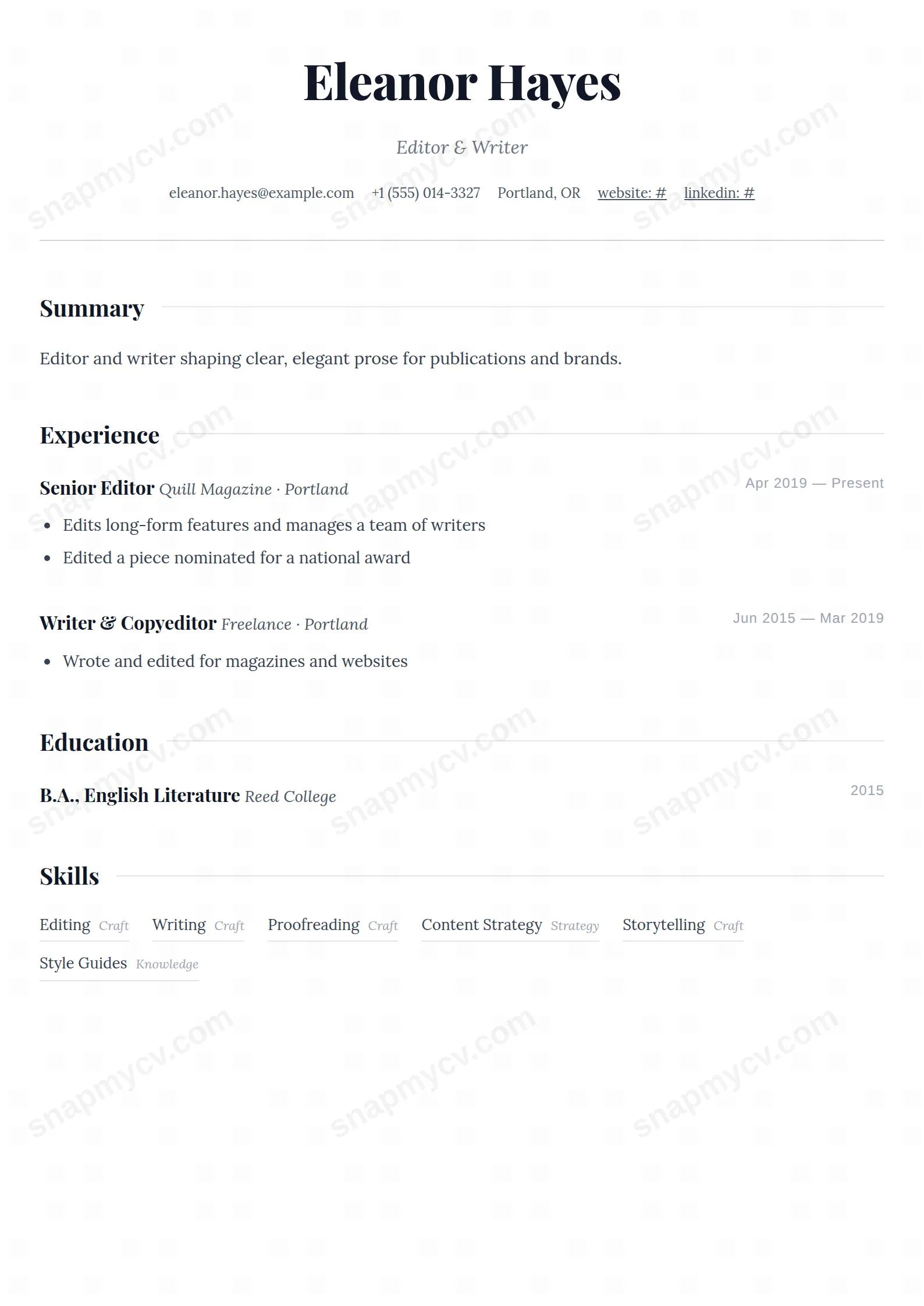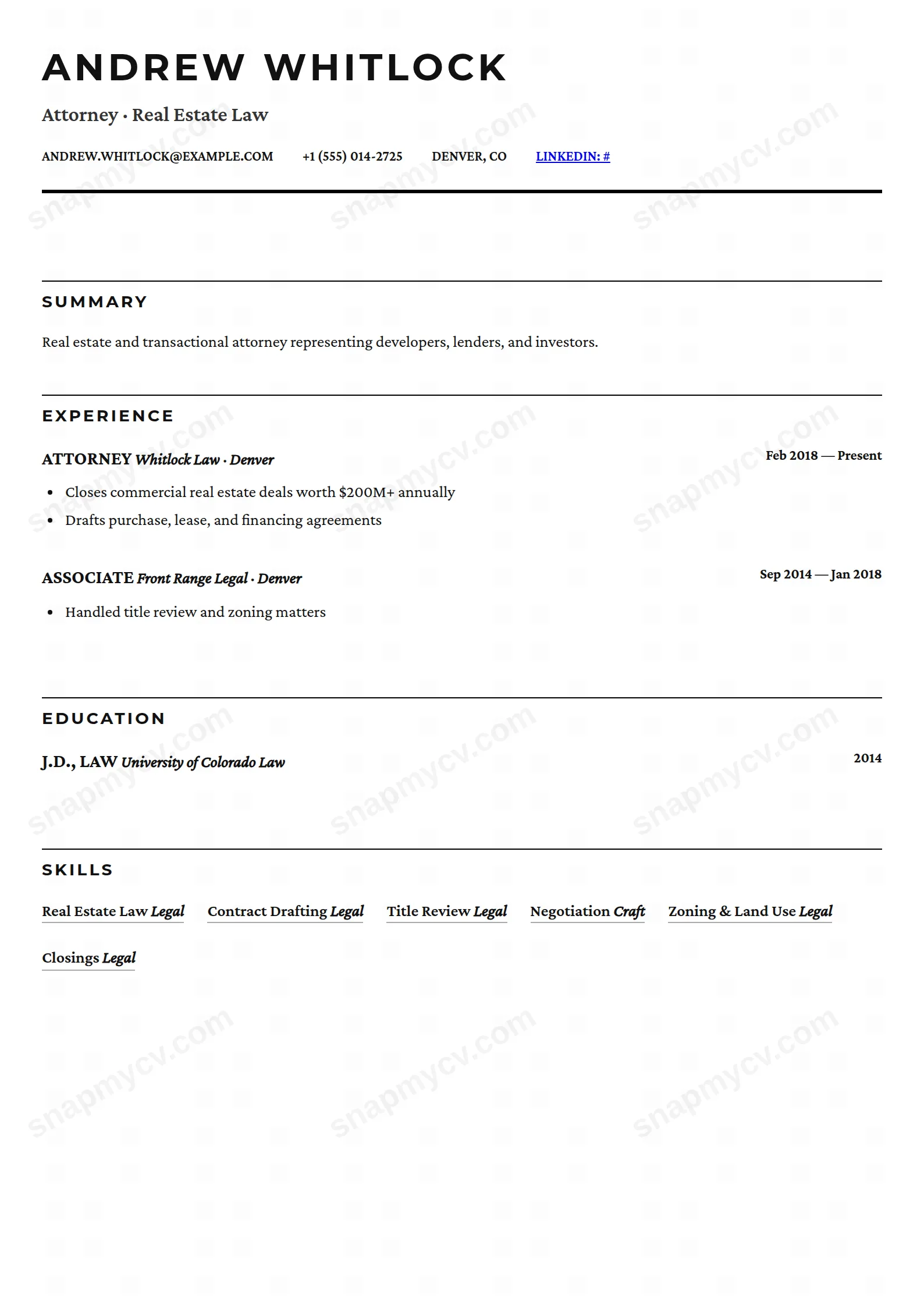
Single-column LaTeX resume in Computer Modern serif — centered name, ruled section headers, and classic academic-professional typography.
Create a free account to customize and publish this design.
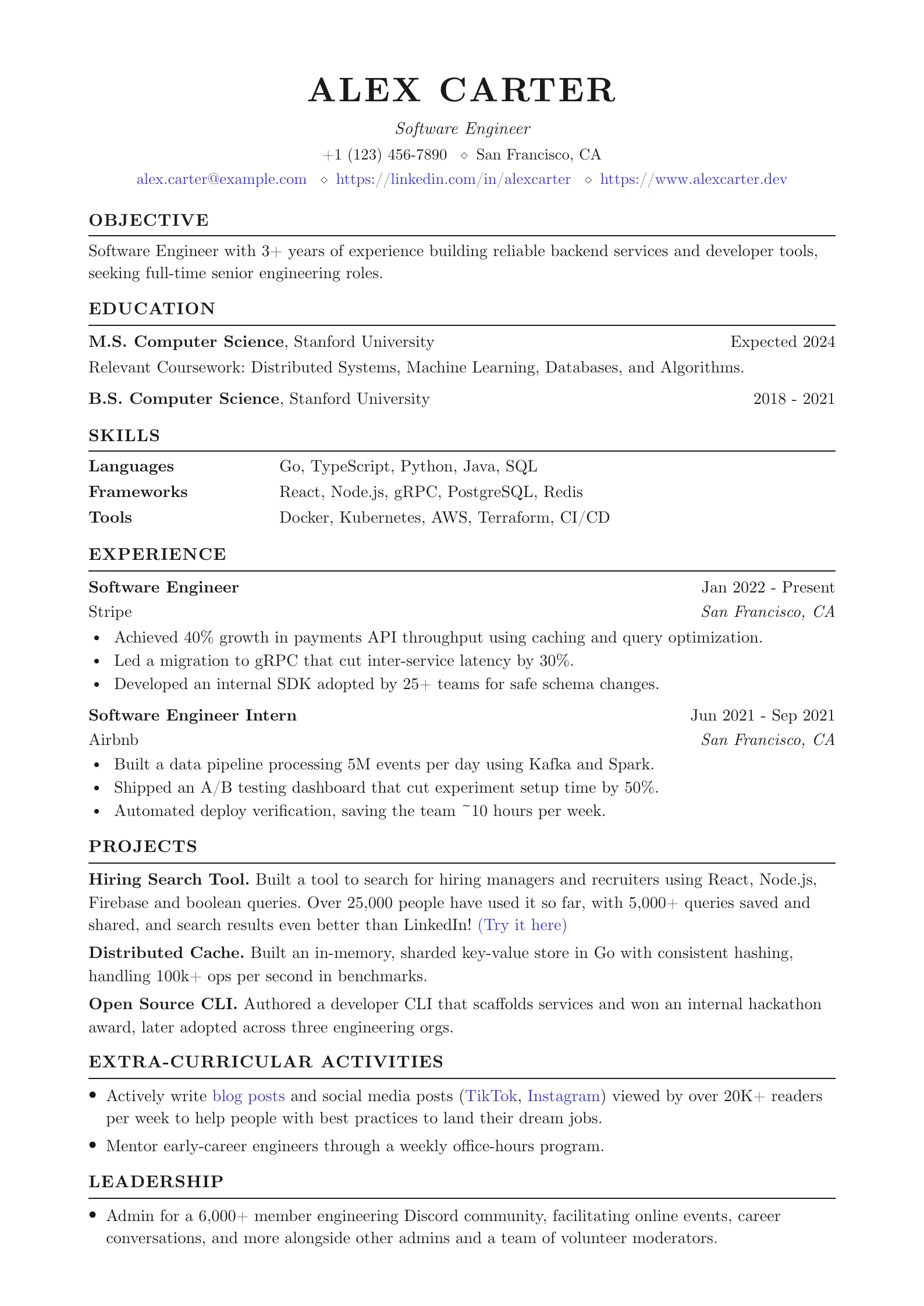
The classic LaTeX resume, faithfully recreated: a single column in Computer Modern serif, a centered name, and thin ruled section headers. It reads exactly like the typeset PDFs recruiters at top tech and research labs are used to, without you touching a line of LaTeX.
Best for: software engineers, researchers, and new grads who want the LaTeX look. Free to fill in, restyle, download as a PDF, or publish at your own SnapMyCV link.
Applicant tracking systems: Light styling. Mostly parseable but uses sidebars, columns or visual elements that may confuse stricter ATS.A template's styling never changes the advice that matters most — lead with achievements, quantify your impact, and tailor the content to each role.
New to writing a CV? Read our step-by-step CV guide and ATS tips, then come back and make this design your own.
Typeset recreates the classic LaTeX academic CV — the one set in Computer Modern, the typeface generations of researchers know from journal papers and lecture notes. It is a single measured column with generous margins, small-caps section headers ruled off by a thin full-width line, and italic Computer Modern for headlines and dates. Nothing here shouts; the credibility comes from the typography itself, the same way a well-set paper reads as serious before you have taken in a single sentence.
Because the whole design leans on one font family and a strict hierarchy of weight and rules rather than colour or boxes, it prints beautifully in black and white and photocopies without losing anything. There is no sidebar to balance, no accent colour to manage, and no graphics to distract an ATS parser — just your name, your sections, and clean rules between them.
This template is at home in fields where a restrained, typeset document is the expected signal: PhD and master's students, postdocs and faculty, research scientists, mathematicians and theoretical physicists, and software or hardware engineers who came up through a technical degree. It also suits anyone applying to labs, journals, fellowships, standards bodies, or graduate programmes, where reviewers read dozens of documents a day and reward clarity over decoration.
It carries an academic structure comfortably: a short objective or research summary up top, then education, publications, teaching, and technical skills in whatever order your field expects. If your CV runs long — as academic CVs legitimately do — Typeset paginates cleanly, so a three- or four-page record of papers and talks still reads as one continuous, well-set document rather than a form someone stretched to fit.
Single-column layouts are the safest thing you can hand an applicant tracking system, and Typeset is single-column by design. There are no text boxes, no tables, and no content hidden in a sidebar the parser might read out of order — everything flows top to bottom in the order a human reads it, which is exactly the order the machine reads it too. Your name, contact line, and every section heading land as plain, selectable text.
That matters most for the technical and academic roles this template targets, where a first-pass filter often decides whether a person ever sees your CV at all. Keep section headings conventional — Education, Experience, Publications, Skills — and the parser will map them without guessing, while the Computer Modern styling keeps the same document looking distinctive to the human on the other side.
Let the whitespace do its job: resist the urge to shrink the margins or the line spacing to cram more in, because the airy measure is what makes the page feel considered. Write your bullet points as concrete, quantified achievements — a benchmark improved, a grant won, a paper accepted, a system shipped — rather than lists of responsibilities, and keep each to a line or two so the justified text stays even.
For publications and talks, use a consistent citation style throughout and lead with the year so a reviewer can scan your recent record at a glance. When you are done, download it as a pixel-perfect A4 PDF for applications, or publish it at your own snapmycv.com link to share with a committee — the Computer Modern rendering stays identical in both.
Yes. It is a single-column layout with no tables, text boxes, or sidebars, so applicant tracking systems read your name, contact details, headings, and bullet points as clean, in-order text. Keep your section headings conventional and the parser will map every section correctly.
Anyone who wants the classic LaTeX academic look without editing LaTeX: PhD and graduate students, postdocs and faculty, research scientists, mathematicians and physicists, and engineers with a technical background — plus applications to labs, journals, fellowships, and graduate programmes.
Absolutely. Academic CVs are often several pages, and Typeset paginates cleanly across A4 pages, so a long record of publications, teaching, and talks stays consistently typeset from the first page to the last.
No. Typeset gives you the Computer Modern typesetting look in a normal point-and-click editor — you fill in your details, and it renders the LaTeX-style document for you. Then download a PDF or publish it online.
Yes. Like every SnapMyCV template it is free to edit, download as a PDF, and publish at your own public link — no credit card required.